August 2026

Digital marketing strategy for measurable business growth

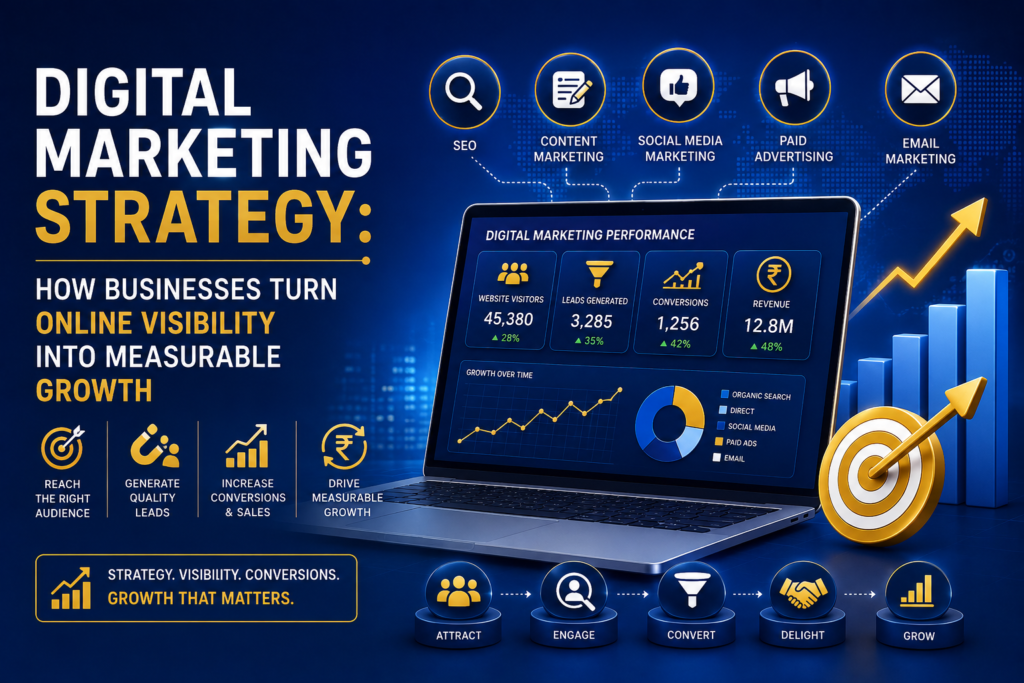
Digital Marketing Strategy: How Businesses Turn Online Visibility Into Measurable Growth

Digital Marketing Strategy: How Businesses Turn Online Visibility Into Measurable Growth Having a website or social media account is no longer enough for a business to succeed online. A strong digital marketing strategy connects visibility with meaningful business outcomes such as qualified leads, sales, customer engagement, and long-term growth. Introduction Digital marketing has become an essential part of modern business growth. Customers now use search engines, social media platforms, websites, online reviews, videos, and other digital channels to discover businesses and make purchasing decisions. However, simply being visible online does not automatically generate revenue. A business may receive website visitors but very few enquiries. It may have thousands of social media followers but limited sales. Similarly, a website may rank for keywords but fail to convert visitors into customers. This is where a strategic approach to digital marketing becomes important. A well-planned digital marketing strategy connects different online activities with specific business objectives. Instead of focusing only on traffic, likes, followers, or rankings, businesses can measure how their marketing efforts contribute to leads, conversions, revenue, customer retention, and brand growth. The goal is not simply to get noticed online. The goal is to turn that visibility into measurable business results. What Is a Digital Marketing Strategy? A digital marketing strategy is a structured plan that explains how a business will use online channels to reach its target audience, communicate its value, generate demand, and achieve measurable business objectives. Depending on the business, a strategy may include: These channels should not operate independently. For example, SEO can bring organic visitors to a website, while strong landing pages can turn those visitors into leads. Social media can build awareness, while email marketing can help nurture potential customers. Paid advertising can generate immediate traffic, while analytics can show which campaigns are producing the best results. A successful strategy connects these activities into a clear customer journey. Why Online Visibility Alone Is Not Enough Online visibility is an important starting point, but it is not the final objective. Imagine a business website receives 10,000 visitors in a month. That number may look impressive. However, if only a few visitors contact the business or make a purchase, the traffic has limited business value. Now consider another website that receives 2,000 highly relevant visitors and generates hundreds of enquiries or purchases. The second business may have a much stronger digital marketing strategy even though it receives less traffic. This demonstrates an important principle: Quality and relevance matter more than vanity metrics alone. Businesses should therefore evaluate digital marketing using metrics that connect marketing activity with actual business outcomes. Start With Clear Business Goals Before selecting digital marketing channels, a business should define what it wants to achieve. Different businesses may have different objectives. For example: The marketing strategy should be built around these goals. Common Digital Marketing Goals A business may focus on: Brand awarenessGetting more potential customers familiar with the brand. Website trafficAttracting relevant visitors through search, social media, advertising, and other channels. Lead generationEncouraging prospects to submit forms, call, message, or request information. Sales and conversionsTurning prospects into paying customers. Customer retentionEncouraging existing customers to return and purchase again. Revenue growthIncreasing the financial return generated by marketing activities. Clear goals make it easier to decide which channels to use and which metrics to track. Understand Your Target Audience A digital marketing strategy becomes much more effective when a business understands who it is trying to reach. Before creating campaigns or content, businesses should identify: This information can influence everything from keyword research and content creation to advertising and website design. Create Customer Personas A customer persona is a simplified representation of an ideal customer. For example, a digital marketing agency targeting local businesses might create a persona such as: Business owner: Runs a small local company, wants more enquiries, has limited time for marketing, and needs measurable results from advertising and SEO. Understanding this type of customer helps the business create more relevant messaging. Instead of saying: “We provide digital marketing services.” the brand could communicate a more specific benefit: “We help local businesses increase search visibility, generate qualified leads, and build a stronger online presence.” The second message focuses more clearly on the customer’s needs and desired outcome. Build a Strong Digital Foundation Before investing heavily in marketing campaigns, businesses need a solid digital foundation. Your website is often the central destination where prospects learn about your business, evaluate your offering, and decide whether to take action. A strong website should be: Make Your Value Proposition Clear Visitors should quickly understand three things: What do you offer? Who do you help? Why should they choose you? If visitors have to search through several pages to understand what a business does, they may leave before taking action. A clear headline, concise supporting message, relevant visuals, and strong calls to action can make the customer journey easier. The Role of SEO in Digital Marketing Strategy SEO helps businesses improve their visibility in organic search results. When people search for products, services, solutions, or information related to a business, appearing prominently in relevant search results can bring valuable traffic. However, SEO should not be treated simply as a ranking exercise. The real objective is to attract relevant users who are likely to take meaningful action. Keyword Research Keyword research helps businesses understand what their target audience is searching for. Instead of targeting only broad keywords, businesses should consider: For example, someone searching for “what is SEO” may be researching the topic, while someone searching for “SEO agency in Mumbai” may already be looking for a service provider. Understanding this difference helps businesses create content and landing pages that match different stages of the customer journey. Create Content Around Search Intent Good SEO content should answer the question behind the search. If a user searches for a particular service, the page should explain that service clearly. If the user is researching a topic, an educational article may be more appropriate. If the user is comparing options,

Digital Marketing Strategy: How Businesses Turn Online Visibility Into Measurable Growth Read More »

Digital Marketing
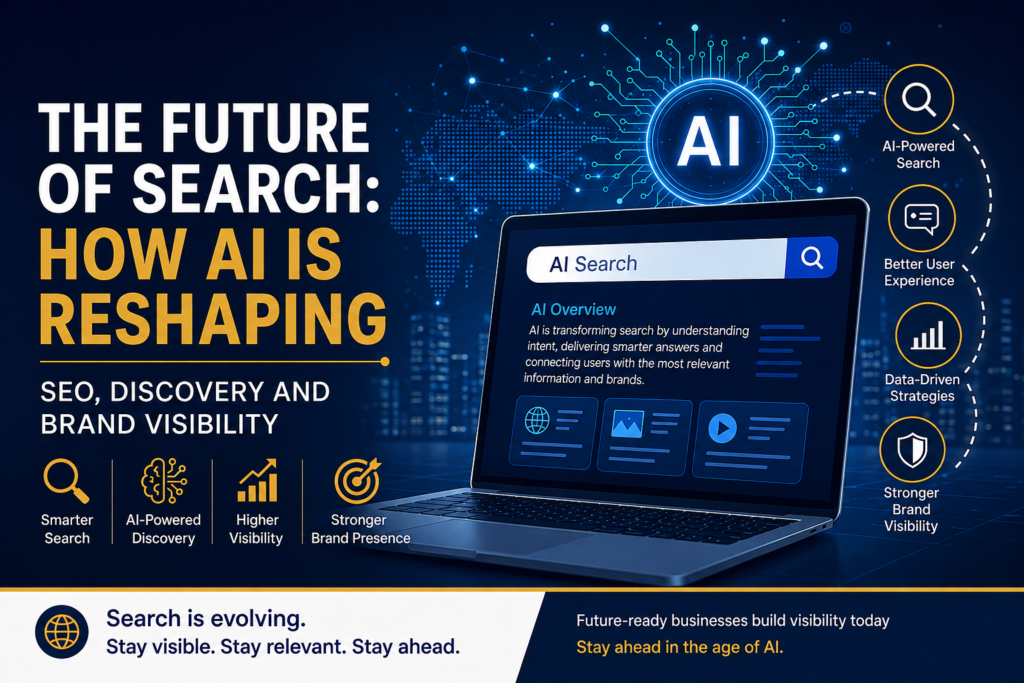
Future of search showing AI SEO and brand visibility

The Future of Search: How AI Is Reshaping SEO, Discovery and Brand Visibility

Search Is Changing, and Businesses Need to Change With It Search is no longer limited to typing a few keywords into Google and choosing a website from a list of blue links. AI is changing how people discover information, compare options, ask questions, and find businesses online. Introduction Search engines have continuously evolved as technology and user behaviour have changed. Today, artificial intelligence is accelerating that evolution by changing how search queries are understood, how information is presented, and how users discover brands. People are increasingly using conversational queries, asking detailed questions, and expecting direct answers rather than simply browsing through multiple websites. At the same time, AI-powered search experiences are becoming more capable of understanding context, intent, entities, and relationships between different pieces of information. For businesses, this creates both opportunities and challenges. Traditional SEO principles such as keyword relevance, quality content, technical optimisation, and authority remain important. However, businesses now also need to think about how their brand and content can be discovered across increasingly AI-driven search experiences. The future of search is therefore not simply about ranking for keywords. It is about becoming a trusted, relevant, and recognizable source of information that search engines and AI systems can understand and confidently surface to users. How Search Is Changing in the Age of AI Artificial intelligence is changing the relationship between users and search engines. Traditional search usually required users to enter a query, review several results, visit websites, and collect information from different sources. AI-powered search can make this process more conversational by helping users explore a topic through questions, follow-up queries, summaries, comparisons, and recommendations. For example, instead of searching separately for: A user may ask a more detailed question such as: “What SEO strategy would be suitable for a small local business with a limited marketing budget?” This type of search contains more context and intent. AI systems can analyze that context and provide a response that attempts to address multiple aspects of the user’s question. Search Intent Is Becoming More Important Keyword matching has always been an important part of SEO, but understanding search intent is becoming even more valuable. Search intent refers to what a person actually wants when they enter a query. Someone searching for “what is SEO” is looking for information. Someone searching for “SEO agency in Mumbai” may be looking for a service provider. Someone searching for “best SEO tools” may be comparing different options. As AI becomes better at interpreting natural language, businesses need to create content that answers the underlying need behind a search rather than simply repeating a specific keyword. From Traditional Search to AI-Powered Discovery The way people discover brands is expanding beyond traditional search results. A potential customer may encounter a business through: This means brand discovery is becoming broader than search engine rankings alone. A business can benefit when its name, expertise, products, services, and information are consistently represented across trustworthy digital sources. Why Brand Recognition Matters When users repeatedly encounter the same brand across different channels, that brand can become more familiar and recognizable. For example, someone might first discover a company through a Google search, later see its content on LinkedIn, read a review, and eventually visit its website. Each interaction contributes to the overall customer journey. Therefore, businesses should think beyond individual keywords and focus on building a consistent digital presence. What AI Search Means for SEO Artificial intelligence does not mean that traditional SEO is no longer relevant. Instead, it is changing how search engines interpret and organize information. Search engines still need to understand websites, pages, topics, businesses, and relationships between different pieces of information. This makes strong SEO fundamentals important even as search experiences become more AI-driven. Quality Content Still Matters AI-powered search experiences rely on information from online sources. Businesses should therefore focus on creating content that is accurate, useful, original, and genuinely relevant to their audience. Instead of creating articles simply to include keywords, focus on answering real questions and providing information that readers can use. Useful content can include: Context Is More Important Than Keyword Repetition Older approaches to SEO often focused heavily on repeating exact keywords throughout a page. Modern search requires a broader approach. For example, an article targeting “local SEO” can naturally discuss: These related concepts help establish the overall subject of the content. The goal should be to demonstrate expertise around a topic rather than repeatedly inserting the same phrase. The Rise of AI Overviews and Answer-Based Search Search experiences are increasingly capable of providing summaries and direct answers to complex questions. Instead of requiring users to open multiple pages immediately, an AI-generated response may summarize information and provide sources for further exploration. This creates a new consideration for businesses: visibility may happen inside an answer as well as through a traditional search result. A page can therefore provide value even when the user does not immediately click through to the website. However, businesses should not assume that appearing in an AI-generated answer is guaranteed simply by adding more keywords. Strong topical relevance, useful information, clear website structure, authority, and trustworthy signals remain important. Why Brand Visibility Matters More Than Rankings Alone Search rankings remain important, but businesses should not measure their entire digital presence through rankings alone. Imagine a customer encounters your brand through: These interactions can all contribute to brand visibility. Build a Recognizable Digital Identity Your business information should be consistent across important online platforms. Pay attention to: Consistency helps users understand who your business is and what it offers. How AI Can Change Keyword Research Keyword research remains valuable, but businesses may need to think beyond short phrases. Users increasingly ask complete questions and conversational queries. For example, instead of searching: “SEO agency Mumbai” a user may ask: “Which SEO services can help a small business in Mumbai get more local customers?” Both searches have a similar underlying topic, but the second provides much more context. Focus on Topics and Questions A stronger keyword strategy can

The Future of Search: How AI Is Reshaping SEO, Discovery and Brand Visibility Read More »

Digital Marketing
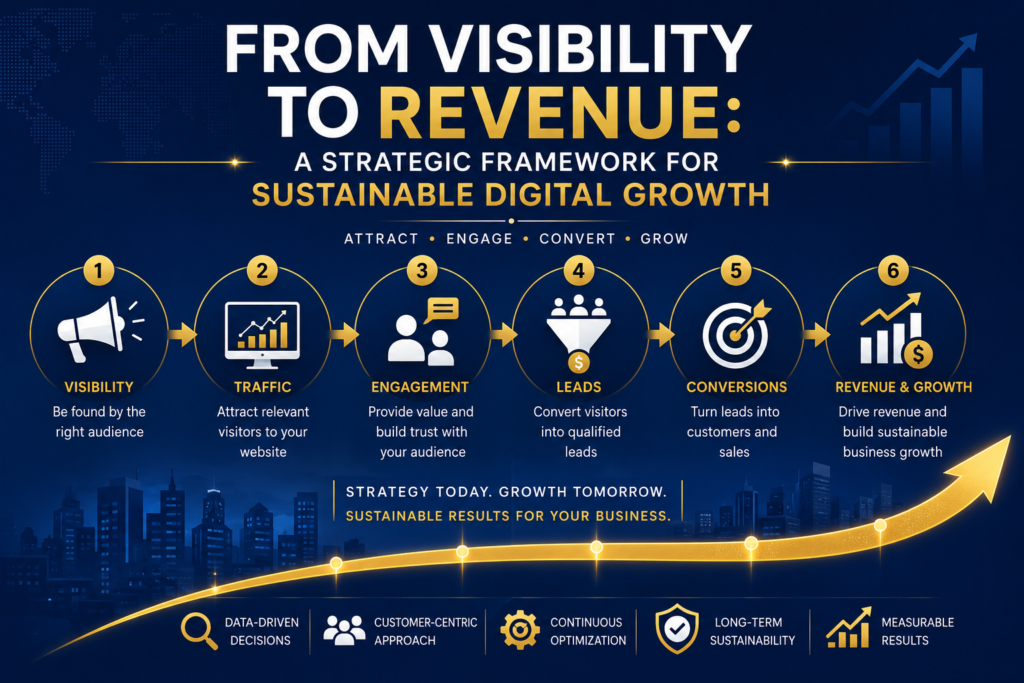
Digital growth strategy showing the journey from online visibility to leads conversions and revenue

From Visibility to Revenue: A Strategic Framework for Sustainable Digital Growth

Build a Digital Strategy That Turns Attention Into Business Results Digital growth is not simply about getting more people to see your brand. The real opportunity lies in turning visibility into meaningful engagement, qualified leads, conversions, and sustainable revenue. Introduction Businesses today have more opportunities than ever to reach potential customers online. Search engines, social media platforms, websites, email marketing, online advertising, and content can all help a brand become more visible to its target audience. However, visibility alone does not guarantee business growth. A website can receive thousands of visitors without generating enough enquiries. A social media account can have a large following without producing consistent sales. Similarly, a brand can appear prominently in search results but still struggle to convert visitors into customers. This creates an important question: How can businesses move from simply being visible online to generating measurable revenue? The answer is a strategic digital growth framework that connects visibility with the rest of the customer journey. Instead of treating SEO, content marketing, social media, paid advertising, and conversion optimization as separate activities, businesses can bring them together around one goal: creating sustainable business growth. What Does Digital Visibility Really Mean? Digital visibility refers to how easily people can discover a business, brand, product, or service across online channels. A business can build visibility through several sources, including: For example, a customer searching for an SEO agency may discover a company through Google Search. Another customer may find the same company through Instagram, a blog article, Google Maps, or a recommendation. The more relevant places where your target audience can discover your business, the greater your potential online visibility. However, visibility should always be connected to the right audience. Reaching people who have no interest in your products or services may increase impressions without creating meaningful business results. Why Visibility Alone Does Not Guarantee Revenue Getting attention online is only the first stage of digital growth. Imagine a business receives 10,000 website visitors in a month but only generates a few enquiries. Another business receives 2,000 visitors but converts a much higher percentage into leads and customers. The second business may generate significantly more revenue despite receiving less traffic. This is why businesses should look beyond metrics such as: These metrics can provide useful information, but they do not always represent business success. A stronger digital strategy connects visibility with: Visibility → Traffic → Engagement → Leads → Conversions → Revenue Each stage needs to support the next. Understanding the Digital Customer Journey Customers rarely move from discovering a business directly to making a purchase. In many cases, they go through several stages before making a decision. A typical customer journey may look like this: Awareness: The customer discovers your brand. Interest: They visit your website or social media profiles. Research: They compare your services, read reviews, and consume your content. Consideration: They evaluate whether your business can solve their problem. Conversion: They contact you, request a quote, make a purchase, or book a service. Retention: A satisfied customer returns or recommends your business to others. Understanding this journey allows businesses to create the right content and marketing activities for each stage. For example, an educational blog can help people in the research stage, while a detailed service page can help someone who is ready to make an enquiry. Build a Strong Digital Foundation Before investing heavily in traffic generation, businesses should make sure their digital foundation is strong. Your website should clearly communicate: Your website should also work well on mobile devices, load efficiently, provide clear navigation, and make important information easy to find. A strong foundation ensures that the traffic generated through SEO, advertising, social media, and other channels has a better opportunity to produce meaningful results. Build a Search Strategy That Attracts the Right Audience Once your digital foundation is ready, the next step is to increase your visibility among people who are actually interested in your products or services. Search engine optimization can play an important role here. Instead of trying to attract everyone, focus on the searches your potential customers are most likely to make. Target Relevant Keywords Keyword research helps you understand what your audience searches for on Google. For example, a digital marketing agency may target terms such as: The goal is not simply to target keywords with the highest search volume. The keywords should also match your business, audience, and customer intent. Create Content Around Customer Needs Useful content can bring potential customers to your website before they are ready to purchase. For example, someone searching for “how to improve Google rankings” may not be ready to hire an SEO agency immediately. However, a detailed article answering that question can introduce them to your brand. Over time, helpful content can build trust and encourage visitors to explore your services. Strengthen Local Visibility For businesses serving specific locations, local SEO can connect the brand with nearby customers. Optimizing your Google Business Profile, maintaining consistent business information, collecting genuine reviews, and creating location-relevant content can improve your chances of appearing in local searches. For example, a Mumbai-based business can create content and service pages relevant to customers searching for services in Mumbai and its surrounding areas. Turn Website Traffic Into Qualified Leads Generating traffic is only part of the process. Once visitors arrive on your website, you need to give them clear reasons and opportunities to take the next step. A visitor may be encouraged to: These actions can turn anonymous website visitors into potential customers. Create Clear Calls to Action Every important page should guide visitors toward an appropriate next step. For example: Learn about the service → View the service details → Request a consultation A call to action should be clear, visible, and relevant to the page. Instead of using vague wording such as “Click Here,” businesses can use more descriptive options such as: Build Trust Before Asking for the Sale People may hesitate to contact a business if they do not have enough information to

From Visibility to Revenue: A Strategic Framework for Sustainable Digital Growth Read More »

Digital Marketing
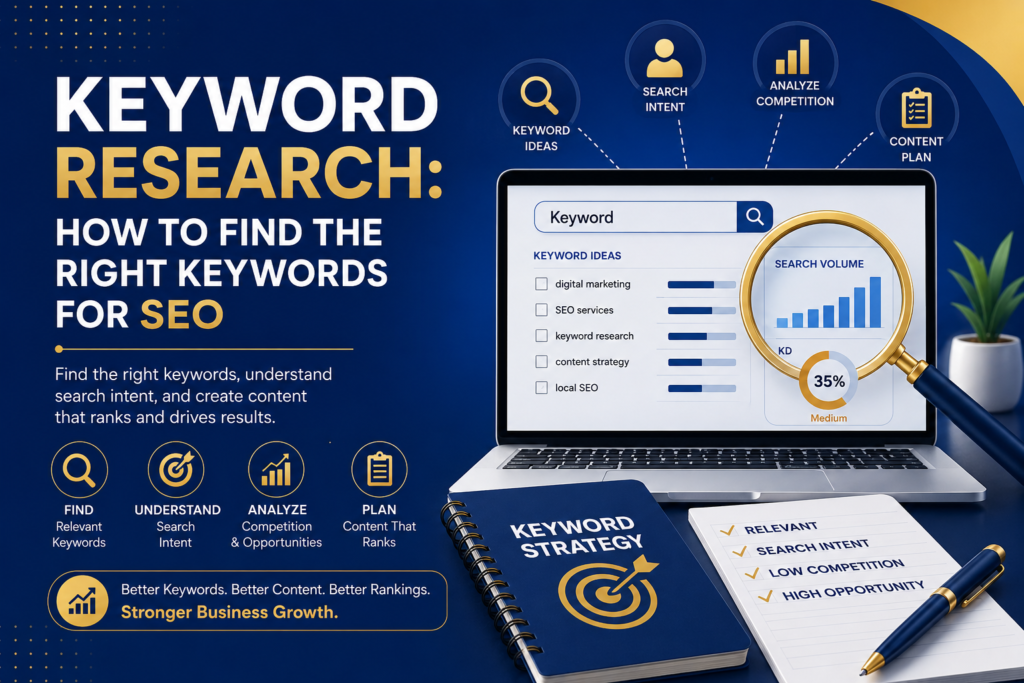
Keyword research process showing how to find the right keywords for SEO

Keyword Research: How to Find the Right Keywords for SEO

Find the Search Terms That Can Bring the Right Audience Choosing the right keywords is one of the most important steps in building a successful SEO strategy. The right keywords help search engines understand your content and help potential customers find your website. Introduction Search engines connect people with information, products, services, and businesses based on what they search for. When someone types a phrase into Google, the search engine analyzes those words and determines which pages are most relevant to the query. This is why keyword research plays an important role in SEO. It helps businesses understand what their target audience is searching for and what information they need. Instead of creating content based only on assumptions, keyword research provides useful insights into search behaviour. However, finding keywords is not simply about choosing the phrases with the highest search volume. A successful keyword strategy also considers search intent, competition, relevance, and the potential value of the audience behind a search. What Is Keyword Research? Keyword research is the process of discovering and analyzing the words and phrases people enter into search engines when looking for information, products, services, or solutions. For example, a person interested in digital marketing might search for: Each of these phrases represents a potential keyword that a business could target through its website content. Keyword research helps you identify which search terms are relevant to your business and which ones have the potential to attract the right visitors. Why Keyword Research Matters for SEO Keyword research provides the foundation for many SEO activities. It can influence your website pages, blog topics, headings, URLs, product descriptions, and content strategy. When you understand what your audience searches for, you can create content that directly addresses their questions and needs. Helps You Understand Your Audience Keyword research gives you insights into the language your audience uses when searching online. For example, a business may describe its service as “online marketing solutions,” while potential customers may search for “digital marketing agency near me.” Understanding this difference can help you create content that matches real search behaviour. Helps You Create Relevant Content Without keyword research, businesses may spend time creating content that receives very little search traffic. Keyword research can reveal questions and topics that people are actively searching for. You can then use those insights to develop useful blog posts, service pages, guides, and other resources. Supports Better Search Visibility Using relevant keywords naturally throughout your content helps search engines understand the topic of a page. However, keywords should never be added unnaturally simply to increase their frequency. Search engines are designed to understand content in context, so your priority should always be useful and readable information. Helps Generate Targeted Traffic Not every website visitor has the same value. A broad keyword may attract many searches but may not bring people who are interested in your services. A more specific keyword with lower search volume could attract visitors who are much closer to making a purchase or contacting a business. Therefore, the goal is not simply to get more traffic. The goal is to attract relevant traffic. Understanding Search Intent Search intent refers to the reason behind a person’s search. Understanding intent is one of the most important parts of keyword research because the same topic can have completely different types of searches. Informational Intent People with informational intent want to learn something or find an answer. Examples include: Blog posts, guides, tutorials, and educational resources can work well for these searches. Commercial Intent Commercial searches usually happen when people are researching options before making a decision. Examples include: Comparison articles, detailed guides, and service-related content can target these searches. Transactional Intent Transactional searches indicate that the person is closer to taking an action. Examples include: Service pages, product pages, pricing pages, and conversion-focused content may be appropriate for these searches. Navigational Intent Navigational searches are used when someone is trying to find a particular website, brand, or business. Examples include: Understanding search intent helps you choose the right type of content for each keyword. Types of Keywords Keywords can also be categorized according to their length and specificity. Short-Tail Keywords Short-tail keywords are generally broad phrases containing one or two words. Examples include: These keywords can have high search demand, but they are often highly competitive and may have broad search intent. Long-Tail Keywords Long-tail keywords are more specific search phrases. Examples include: Long-tail keywords often have lower search volume than broad terms, but they can be more specific and may attract a more targeted audience. Branded Keywords Branded keywords include the name of a company, product, or brand. For example: These searches are usually associated with users who already know the brand or product. Location-Based Keywords Location-based keywords include a city, region, neighbourhood, or “near me” phrase. Examples include: These keywords are particularly useful for businesses that serve specific geographic areas. How to Find the Right Keywords for Your Website Finding keywords is more than entering a topic into a keyword tool and choosing the phrase with the highest search volume. Effective keyword research requires understanding your audience, competitors, search intent, and business goals. Start With Your Main Topics Begin by listing the main products, services, and topics related to your business. For a digital marketing agency, these could include: These broad topics can then be expanded into more specific keyword ideas. Think Like Your Customer Put yourself in the position of your target customer. Ask yourself: For example, someone who wants to improve their website might search for “how to improve Google rankings,” while someone ready to hire an agency might search for “SEO services for small businesses.” Both searches are valuable, but they represent different stages of the customer journey. Use Keyword Research Tools Keyword research tools can help you discover search terms, related keywords, competition levels, and other useful data. Popular tools include: You don’t necessarily need to use every tool. Choose the tools that provide the information you need and fit your

Keyword Research: How to Find the Right Keywords for SEO Read More »

Digital Marketing
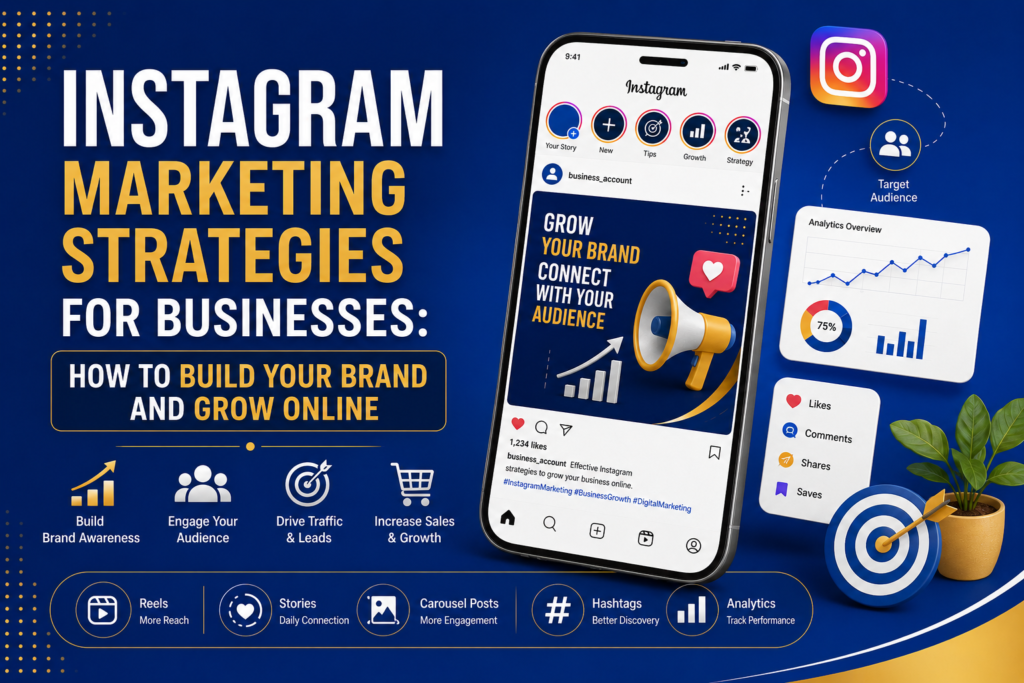
Instagram marketing strategies for businesses to build a strong online presence and grow their brand

Instagram Marketing Strategies for Businesses: How to Build Your Brand and Grow Online

Why Instagram Marketing Matters for Businesses Instagram has become an important platform for businesses that want to increase brand visibility, connect with customers, and showcase their products or services. A clear Instagram marketing strategy helps businesses turn social media activity into meaningful engagement, website traffic, leads, and sales. Introduction Instagram is no longer just a platform for sharing photos and personal updates. It has become a powerful digital marketing channel where businesses can build their identity, reach potential customers, showcase their expertise, and create long-term relationships with their audience. From Reels and Stories to carousel posts, live videos, and paid advertising, Instagram provides businesses with multiple ways to communicate with their target audience. However, simply creating an account and posting occasionally is not enough to achieve consistent results. Businesses need a well-planned Instagram marketing strategy that focuses on the right audience, valuable content, consistent branding, meaningful engagement, and measurable goals. Whether you run a local business, e-commerce store, professional service, startup, or established brand, Instagram can help you create a stronger online presence when it is used strategically. In this guide, we will explore effective Instagram marketing strategies that can help businesses build brand awareness, attract the right audience, increase engagement, generate leads, and support long-term online growth. What Is Instagram Marketing? Instagram marketing is the process of using Instagram to promote a business, product, service, or brand. It involves creating and distributing valuable content, engaging with followers, building a recognizable brand identity, and using Instagram’s advertising and analytics features to achieve specific marketing objectives. An effective Instagram marketing strategy may include: The goal is not simply to gain followers. A strong strategy focuses on attracting the right audience and turning attention into meaningful business results. Why Businesses Should Use Instagram Marketing Instagram offers businesses an opportunity to communicate with customers in a highly visual and interactive environment. A professional and active presence can help potential customers understand what your business offers and why they should choose your brand. Build Brand Awareness Consistent Instagram content keeps your business visible to your target audience. When people repeatedly see your brand, messaging, products, and visual identity, your business can become more recognizable. Showcase Products and Services Instagram provides several formats for demonstrating what your business offers. Businesses can use images, Reels, Stories, carousels, and videos to explain products, demonstrate services, answer questions, and highlight customer experiences. Connect With Your Target Audience Instagram allows businesses to communicate directly with their audience through comments, direct messages, Stories, polls, questions, and other interactive features. This two-way communication can help businesses understand customer needs and build stronger relationships. Drive Website Traffic Instagram can also support website traffic by directing interested users toward important pages such as product pages, service pages, landing pages, blog articles, or contact forms. Generate Leads and Sales With the right combination of valuable content, calls to action, landing pages, and advertising, Instagram can become an important part of a business’s lead-generation and sales strategy. Define Your Instagram Marketing Goals Before creating content, businesses should determine what they want Instagram to accomplish. Without clear goals, it becomes difficult to measure whether your efforts are actually helping the business. Your goals could include: Each goal requires a slightly different content and measurement strategy. For example, a business focused on brand awareness may prioritize reach and impressions, while a business focused on lead generation may pay more attention to website clicks, inquiries, and conversions. Understand Your Target Audience Knowing your audience is one of the most important parts of Instagram marketing. Before creating content, identify the people most likely to need your products or services. Consider factors such as: Understanding your audience helps you create content that is relevant rather than simply promotional. Create a Customer Profile A customer profile can help you understand who you are trying to reach. For example, a digital marketing agency might target business owners who: Once you understand your ideal customer, you can create content specifically around their questions, challenges, and goals. Optimize Your Instagram Business Profile Your Instagram profile is often the first place potential customers visit after discovering your content. A professional profile should immediately communicate: Who you are + What you offer + Who you help + What action visitors should take Use a Clear Profile Name Your profile name should make it easy for people to understand your business or service. Where appropriate, include a relevant keyword that describes your business. Write a Strong Bio Your Instagram bio should be concise but informative. It can include: Add a Relevant Website Link Use the website link in your Instagram profile to direct visitors to your most important page. Depending on your goal, this could be: Use Professional Branding Keep your profile visually consistent with your overall business identity. Use consistent: A consistent visual identity helps people recognize your brand across different marketing channels. Create a Consistent Content Strategy A successful Instagram presence depends on consistently publishing useful and engaging content. However, consistency doesn’t mean posting the same type of content every day. Your strategy should include a balanced combination of educational, entertaining, promotional, and community-focused content. Educational Content Educational content helps demonstrate expertise and provide value. Examples include: Promotional Content Promotional content introduces your products or services and encourages potential customers to take action. Examples include: Engagement Content Engagement-focused content encourages followers to interact with your brand. Examples include: A balanced content mix prevents your Instagram account from becoming a constant sales pitch. Use Instagram Reels to Increase Reach Instagram Reels are an important part of a modern Instagram marketing strategy because short-form video can help businesses reach people beyond their existing followers. Businesses can use Reels to: Keep your videos focused on one clear idea and make the opening seconds interesting enough to encourage viewers to continue watching. Use Instagram Stories to Stay Connected Instagram Stories are useful for maintaining regular communication with your audience. Because Stories disappear after 24 hours, they are particularly effective for timely updates and interactive content. Businesses can use

Instagram Marketing Strategies for Businesses: How to Build Your Brand and Grow Online Read More »

Digital Marketing
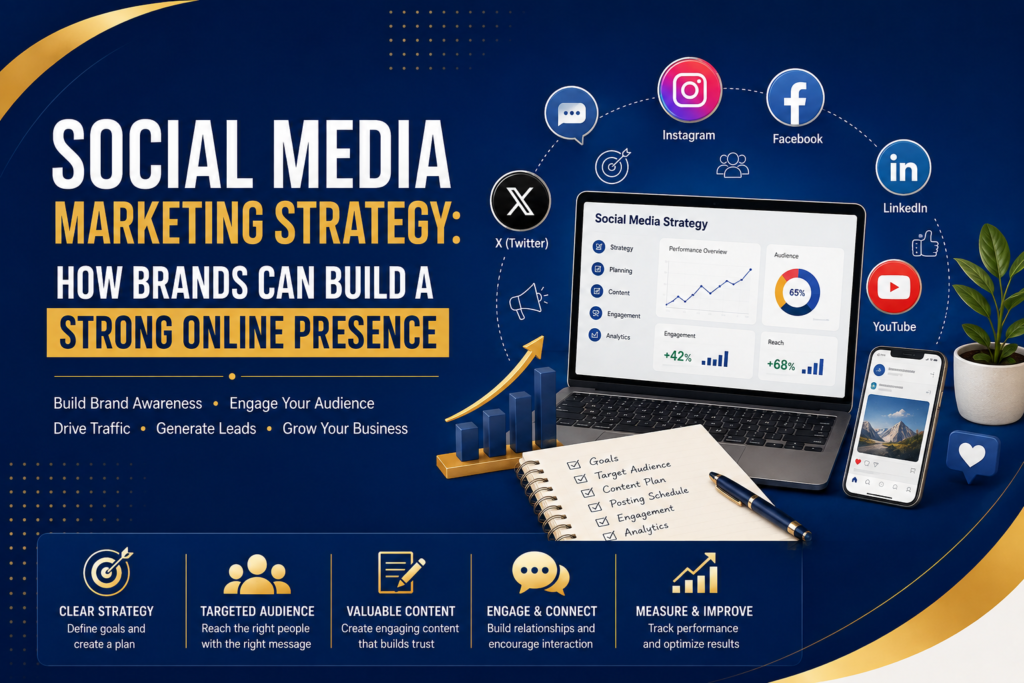
Professional illustration showing a social media marketing strategy for brands using Facebook, Instagram, LinkedIn, YouTube, and analytics to build a strong online presence.

Social Media Marketing Strategy: How Brands Can Build a Strong Online Presence

Why Every Brand Needs a Social Media Marketing Strategy Social media has become one of the most powerful tools for building brand awareness, engaging customers, and driving business growth. However, simply posting content regularly is no longer enough. Brands need a well-planned social media marketing strategy that aligns with their goals, reaches the right audience, and delivers measurable results. Introduction Social media has transformed the way businesses connect with their audiences. Platforms like Facebook, Instagram, LinkedIn, X, Pinterest, and YouTube have become essential marketing channels where brands build relationships, showcase products and services, and establish credibility. With billions of active users worldwide, social media offers businesses an opportunity to reach potential customers at every stage of the buying journey. However, success doesn’t come from posting random updates or following trends without a plan. It requires a clear strategy based on business objectives, audience insights, valuable content, and continuous performance analysis. Whether you’re a startup, a local business, or an established brand, having a well-defined social media marketing strategy helps you stay consistent, strengthen your brand identity, and achieve sustainable growth. In this comprehensive guide, you’ll learn how to build an effective social media marketing strategy that increases brand visibility, engages your audience, generates leads, and supports long-term business success. What Is a Social Media Marketing Strategy? A social media marketing strategy is a structured plan that outlines how a business will use social media platforms to achieve its marketing goals. It defines what content will be shared, where it will be published, who the target audience is, how success will be measured, and how each activity supports the overall business objectives. Instead of posting without direction, a strategy ensures that every piece of content contributes to building brand awareness, increasing engagement, generating leads, or driving sales. A successful strategy combines creativity with data-driven decision-making, allowing businesses to adapt their approach based on audience behaviour and campaign performance. Why Is a Social Media Marketing Strategy Important? Many businesses create social media accounts but struggle to achieve meaningful results because they lack a clear plan. A strong strategy provides direction, consistency, and measurable outcomes. An effective social media marketing strategy helps businesses:   Increase brand awareness. Build trust and credibility. Reach the right target audience. Drive qualified website traffic. Generate leads and sales. Improve customer engagement. Strengthen customer relationships. Stay ahead of competitors. Support long-term business growth. Rather than focusing solely on vanity metrics such as likes or followers, a strategic approach prioritises meaningful engagement and measurable business results. The Role of Social Media in Modern Brand Building Today’s customers expect brands to maintain an active and professional presence across social media platforms. Before making a purchase, many consumers check a company’s social profiles to learn more about its products, services, customer interactions, and reputation. Social media allows brands to:   Tell their brand story. Showcase expertise. Demonstrate products and services. Share customer success stories. Educate their audience. Build an engaged community. Provide customer support. Collect valuable feedback. When used strategically, social media becomes much more than a marketing channel—it becomes a platform for building long-term relationships with customers. Key Benefits of a Strong Social Media Marketing Strategy A well-planned strategy provides several long-term advantages that contribute to sustainable business growth. Increased Brand Visibility Consistent, high-quality content helps your brand reach a wider audience and remain visible in an increasingly competitive digital landscape. Better Audience Engagement Social media enables two-way communication. Responding to comments, answering questions, and participating in conversations helps build stronger relationships with your audience. Higher Website Traffic Sharing valuable content with clear calls to action encourages users to visit your website, explore your services, and learn more about your business. Improved Lead Generation A strategic combination of educational content, promotional campaigns, and lead magnets can attract qualified prospects who are genuinely interested in your products or services. Stronger Customer Trust Brands that consistently provide valuable information, engage authentically, and respond promptly to customer inquiries build greater trust and credibility over time. Common Goals of a Social Media Marketing Strategy Every business has unique objectives, but most social media strategies focus on one or more of the following goals:   Building brand awareness. Increasing website traffic. Generating qualified leads. Growing an engaged online community. Driving product or service sales. Improving customer retention. Enhancing brand reputation. Supporting SEO through content distribution. Establishing thought leadership within the industry. Defining clear goals from the beginning helps businesses measure performance accurately and optimise their strategy over time. Social Media Marketing Is More Than Just Posting Content One of the biggest misconceptions is that social media marketing involves publishing regular posts. In reality, successful brands invest time in research, planning, audience analysis, content creation, community management, advertising, and performance tracking. Every post should support a broader marketing objective and contribute to the overall customer journey. Businesses that focus on delivering value rather than simply promoting products are more likely to build loyal communities and achieve lasting success. Setting SMART Social Media Goals Every successful social media marketing strategy begins with clearly defined goals. Without specific objectives, it’s difficult to measure performance or determine whether your marketing efforts are delivering real business value. Instead of aiming to “get more followers,” focus on measurable outcomes that align with your overall business objectives. A widely accepted framework for setting goals is the SMART method. Your goals should be:   Specific – Clearly define what you want to achieve. Measurable – Track progress using metrics and analytics. Achievable – Set realistic targets based on available resources. Relevant – Align social media activities with business objectives. Time-bound – Establish a clear deadline for achieving each goal. Examples of SMART Social Media Goals   Increase Instagram followers by 20% within six months. Generate 100 qualified leads through LinkedIn in three months. Improve Facebook engagement rate by 15% over the next quarter. Increase website traffic from social media by 30% within six months. Generate 50 monthly inquiries through social media campaigns. Having measurable goals allows businesses to evaluate what works and

Social Media Marketing Strategy: How Brands Can Build a Strong Online Presence Read More »

Digital Marketing