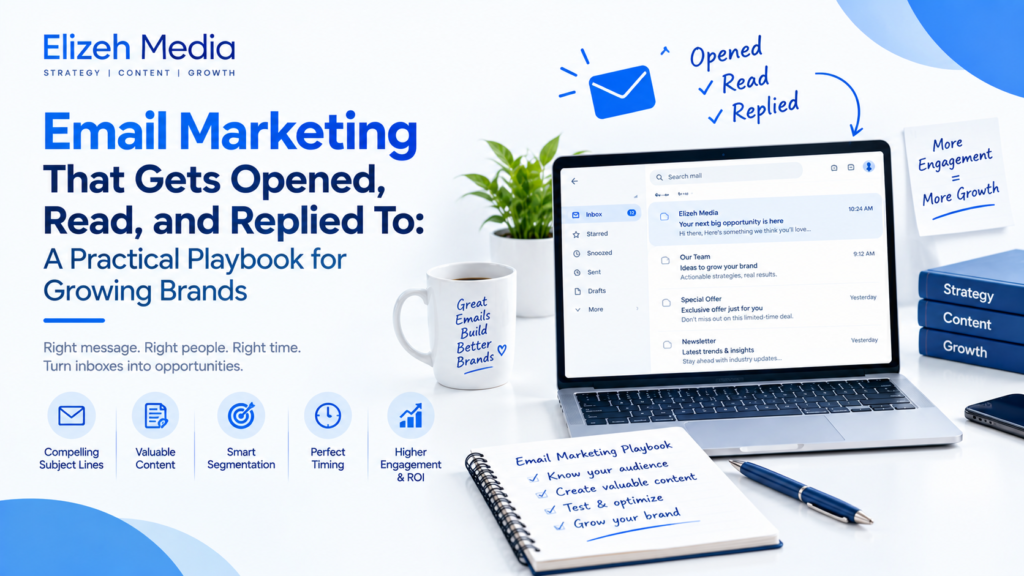
Email Marketing That Gets Opened, Read, and Replied To: A Practical Playbook for Growing Brands
Email Marketing That Gets Opened, Read, and Replied To: A Practical Playbook for Growing Brands Most business owners treat email like a chore. They send a newsletter when they remember, stuff it with updates nobody asked for, and then decide “email doesn’t work for us.” Email works. The way most brands use it doesn’t. A solid email marketing strategy does three things. It reaches people who already raised their hand. It builds trust over time. And it turns that trust into sales without begging. As a digital marketing agency in Mumbai, we see the same pattern across industries: brands with a small, well-cared-for list beat brands with a huge, ignored one. This playbook walks you through the full process. You’ll learn how to build a list, write emails people open, set up automation, and measure what matters. No theory. Just the moves that work. Why Your Inbox Still Beats Every Other Channel You Don’t Own Think of social media as renting a shop in a busy market. The crowd is big, but the landlord changes the rules whenever he likes. Email is your own shop. The door, the lock, and the customer list belong to you. The Algorithm Can’t Take Your List Away A social post reaches only a slice of your followers. Platforms decide who sees what, and those decisions shift without notice. One update can cut your reach in half overnight. An email lands in the inbox of every person on your list. Whether they open it depends on you, not on an algorithm. That control is rare in marketing. Protect it. What Email Earns Compared to Social Media Industry surveys regularly place email among the highest-return channels in digital marketing. The reason is simple. Email reaches people who already know you. They signed up. They gave you permission. Warm audiences buy more often and cost less to convert. A cold ad has to introduce you, earn trust, and ask for the sale in one breath. An email only needs to continue a conversation that already started. Build a List That Wants to Hear From You A big list means nothing if nobody reads it. Ten thousand strangers will earn you less than five hundred people who like what you say. Lead Magnets That People Actually Download A lead magnet is the gift you give in exchange for an email address. Most are forgettable. “Subscribe for updates” is not a gift. Good lead magnets solve one small problem fast. A salon could offer a hair-care checklist for monsoon season. An accountant could share a one-page GST filing calendar. A fitness coach could send a three-day meal plan. Ask yourself one question. Would my ideal customer save this file? If the answer is no, rework it. Signup Forms That Don’t Feel Like Begging Place your form where attention already sits. Put one at the end of each blog post, one in your website footer, and one on your contact or about page. Keep it short. Name and email are enough. Every extra field costs you signups. Tell people what they will get and how often. “One practical tip every Thursday” beats “Join our newsletter” every time. The Permission Rule That Protects Your Reputation Never add people to your list without their consent. Buying lists feels like a shortcut. It is a trap. Bought contacts don’t know you. They mark your emails as spam, and that damages your sender reputation. Once inbox providers distrust your domain, even your loyal subscribers stop seeing your emails. Earn every address. Slow growth is healthy growth. Pick a Platform Without Overpaying for Features You’ll Never Use You do not need the most expensive tool. You need one that matches your stage. Start with what you must have: a simple drag-and-drop editor, list segmentation, basic automation, and clear reports. Almost every reputable platform offers these. Many have free or low-cost starter plans. Check four things before you commit. Don’t spend weeks comparing tools. The best platform is the one you actually send from. Segment First, Write Second Sending the same email to everyone is like giving the same speech at a wedding and a funeral. The words might be fine. The timing is wrong. Segmentation means splitting your list into groups so each person gets a message that fits. Three Simple Segments Any Business Can Start With You don’t need a complex system. Begin here: Even these three groups will change your results. Behavior-Based Groups That Lift Replies Once the basics run smoothly, sort people by what they do. Who clicked your pricing link? Who read every email about SEO but ignored the ones about ads? Who bought twice? Behavior tells you what people want, without a survey. Send more of what they respond to. Send less of what they skip. Subject Lines: The Five Words That Decide Everything Your subject line is a doorman. If he doesn’t like what he sees, nobody gets inside. Most people decide in a second. They scan the sender name, read the subject, and choose. Your email might be brilliant, but it dies unread if the subject fails. Curiosity vs. Clarity Curiosity gets clicks when it feels honest. “The mistake costing you repeat customers” makes people wonder. Clarity works when the offer is strong. “20% off all skincare until Sunday” tells people exactly what they get. Avoid the trap in between. Vague teasers that never pay off train readers to ignore you. Keep subject lines short. Aim for under fifty characters so they don’t get cut off on mobile. Preview Text: The Forgotten Second Headline The preview text is the grey line next to your subject. Most brands leave it blank, so inboxes fill it with “View in browser” or random footer text. Use it. Treat it as a second headline. If the subject raises a question, let the preview hint at the answer. Write Emails Like You’re Talking to One Person You’re not writing to a list. You’re writing to Priya, who runs a boutique in Bandra